The ICC fired its prosecutor for misconduct. The warrants he weaponized must go next.
Karim Khan's removal proves the ICC's anti-Israel prosecution was driven by a corrupt official — now the court must reckon with what that means.
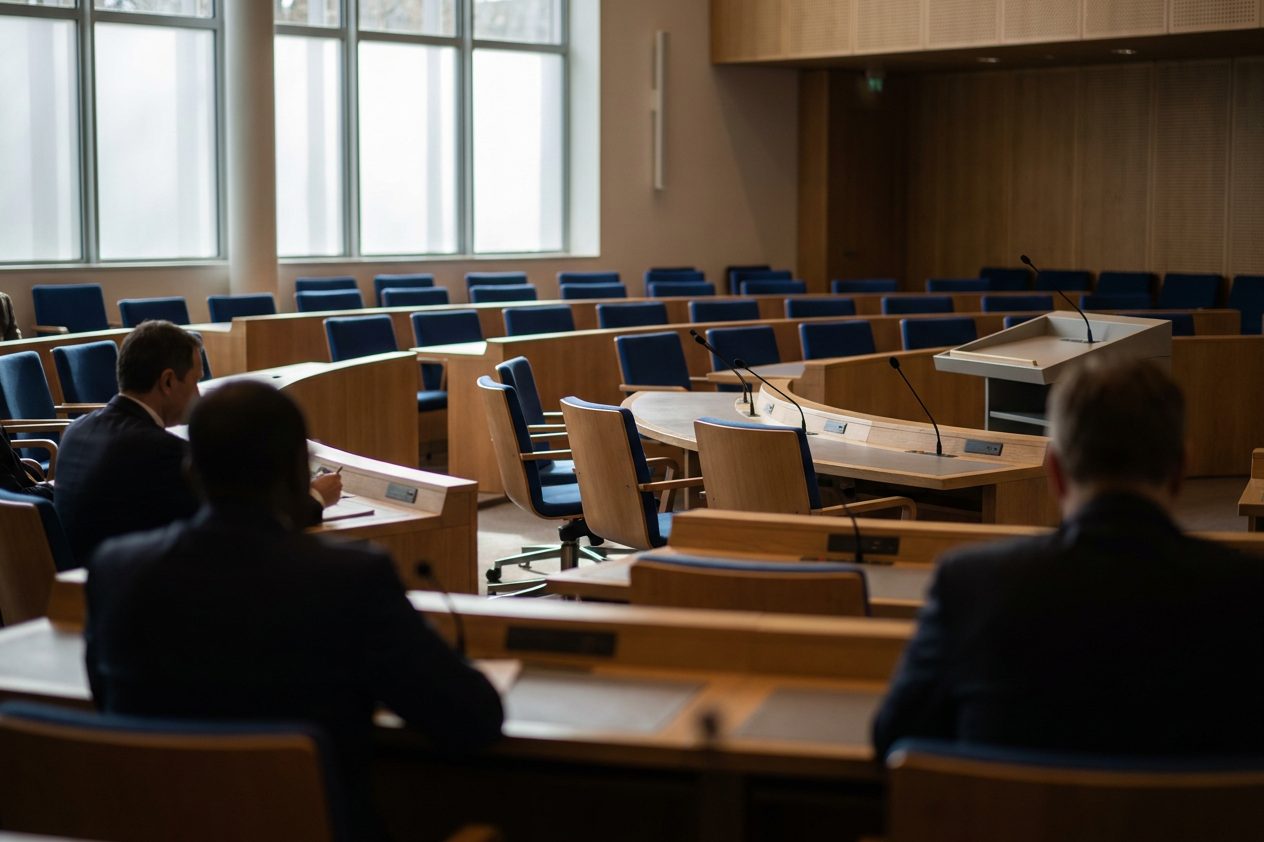
On July 24, the International Criminal Court's 125-member Assembly of States Parties did something that had never been done in the court's 24-year history: it voted, by a large majority, to remove its chief prosecutor from office. Karim Khan — the British barrister who made himself famous by pursuing arrest warrants against Israeli Prime Minister Benjamin Netanyahu and former Defense Minister Yoav Gallant — was ousted for "serious misconduct and serious breach of duty." The court's oversight body found he had engaged in a sexual relationship with a junior female lawyer on his staff and tried to prevent her from pursuing her allegations against him.
I have spent my career arguing that institutions matter only as much as the integrity of the people running them. The ICC just proved the point — badly.
Let me be precise about what the record now shows, because precision matters here more than outrage. According to documents seen by the Associated Press, Khan engaged in a sexual relationship with the woman and tried to prevent her from pursuing her allegations. The oversight body concluded that given the power imbalance between the prosecutor and his junior staffer, "a sexual relationship could never be appropriate." Khan has steadfastly denied wrongdoing throughout — but the Assembly of States Parties voted to remove him anyway, and the court's oversight body, the Assembly of States Parties, concluded that Khan had committed "serious misconduct and serious breach of duty," said its president, Päivi Kaukoranta.
Now here is the part that cannot be overlooked. The Wall Street Journal — as reported by JNS — reported that Khan asked the complainant to withdraw her allegations so that he could proceed with seeking the arrest warrants for Netanyahu and Gallant. According to her own UN testimony, he told her: "Think about the Palestinian arrest warrants." The man who positioned himself as the avenging sword of international justice against the Jewish state was, by this account, using that same prosecution as a private silencing tool — dangling it before a woman he had harmed to keep her quiet.
I have litigated terror cases in U.S. federal courts for decades. I know what prosecutorial integrity requires. It is not optional. It is not decorative. A prosecution built on evidence gathered under the direction of a prosecutor who allegedly leveraged that very prosecution to suppress a victim's complaint is a prosecution the court should be ashamed of — not proud of.
The ICC's defenders will say the warrants stand regardless of Khan. They are technically correct: Khan's removal will have no immediate impact on the 2024 arrest warrants for Netanyahu and Gallant, which can only be withdrawn by ICC judges. That answer is legally neat and morally evasive. The prosecution of sitting leaders of a democratic state — the first time the court has ever pursued warrants against a Western ally — was driven personally by a man whom his own institution has now found committed serious misconduct and serious breach of duty. The warrants were not generated by some neutral algorithmic process. They were the product of choices made by this specific prosecutor, who by the record was simultaneously abusing a staff member and reportedly dangling those same warrants to silence her.
The United States understood something about Karim Khan before the ICC's own member states caught up. Washington sanctioned Khan and more than a dozen other ICC staff in response to the court's overreach against Israel and American personnel. Critics called those sanctions an assault on international justice. What do they call them now? The prosecutor Washington identified as unfit for his position has been confirmed as unfit by his own institution. The U.S. was right.
This is not a moment for schadenfreude. There is a junior female lawyer who came to the ICC to serve international justice and was instead, according to the findings, subjected to a sexual relationship she could not meaningfully consent to within that power structure — and then allegedly pressured to stay silent so that her abuser's most headline-grabbing prosecution could proceed. She deserves to have her testimony taken seriously. The Assembly at last did. It should have acted faster.
For Israel, the practical question is now acute. Netanyahu and Gallant carry arrest warrants issued in 2024 that were personally championed by a prosecutor his own institution has since fired for abusing his power and the trust of a junior staff member. The ICC's incoming leadership faces a choice: conduct a genuine review of how those warrants were initiated, or live with the credibility damage of warrants stamped with Khan's fingerprints. "Political considerations have been folded into this," Utrecht University researcher Iva Vukusic told the AP, "especially as it is the first time a prosecutor has pursued warrants against a Western ally."
The ICC was built on the premise that no one is above the law. Karim Khan clearly believed he was. The Assembly proved him wrong on July 24.
Now the court must prove that principle applies to the warrants he left behind.